


Cura tus dolencias con un secador de pelo
Cura tus dolencias con un secador de pelo
Limited offer! Ends at midnight:
 Instant delivery via email right after purchase
119 real remedies, organized by symptom - no filler chapters
Every remedy uses things already in your home (a hair dryer, a towel, your own hands)
Written by a doctor with 30 years treating real patients, East and West medicine combined
Includes the "when to stop and see a doctor" checklist for every remedy
No se pudo cargar la disponibilidad de retiro
- American express payment method
- Apple pay payment method
- Google pay payment method
- Shopify pay payment method
- Discover payment method
- Visa payment method

Cura tus dolencias con un secador de pelo

A simple remedy is still a limited remedy. For everyday, minor complaints, these pages can genuinely help but they are not a substitute for a doctor.
Does This Book Replace Medical Advice from a Doctor?

Does This Book Replace Medical Advice from a Doctor?
NO.
The information provided in this book is for educational and informational purposes only. It is not intended to substitute for professional medical advice, diagnosis, or treatment by a qualified physician or healthcare provider.
How will I receive my order?

How will I receive my order?
After your payment is completed, you’ll get an email containing the download link(s) for your files.
You can also access your order immediately after payment by clicking “Access my order”.
Great! Feel free to enjoy your video training, books, and spreadsheets however you like.
You can always find your order later by going to the “Member Area” menu. Just make sure to log in using the same email address you used when placing the order.
What are the best natural remedies for common health problems?
What are the best natural remedies for common health problems?
This comprehensive book brings together 200 powerful natural formulas into one complete and easy-to-follow system.
Using simple, quick, and 100% natural recipes, the book provides clear daily guidance that easily fits into your busy lifestyle. Most preparations take only a few minutes using common ingredients you probably already have in your kitchen.
Whether you want to support weight loss, detoxification, glowing skin, higher energy, stronger immunity, or other everyday health concerns, this book delivers a progressive and accessible approach with visible and long-lasting results.
Will this method still work even if I have no experience with herbal medicine?
Will this method still work even if I have no experience with herbal medicine?
Absolutely. This book is written for regular people, not experts. Each recipe is explained step-by-step in a simple and clear way, so anyone can follow and use it successfully without any prior knowledge of herbalism.
How does our program differ from other books on medicinal plants?
How does our program differ from other books on medicinal plants?
Most books about medicinal plants tend to overwhelm readers with rare ingredients or questionable claims. Ours is different. Every remedy is based on both traditional wisdom and modern research, using common plants and ingredients you likely already have in your kitchen.
Additionally, the program is specifically designed to help you achieve clear, targeted goals such as weight loss, beauty enhancement, detoxification, and more.
Is there a guarantee?
Is there a guarantee?
Yes! We provide a 30-day money-back guarantee after your purchase.
If the program doesn’t meet your expectations, you can easily request a full refund - no questions asked.
 Instant Delivery by Email
 30-Day Guarantee
 24/7 Support


About the Dr. Victor Zhang
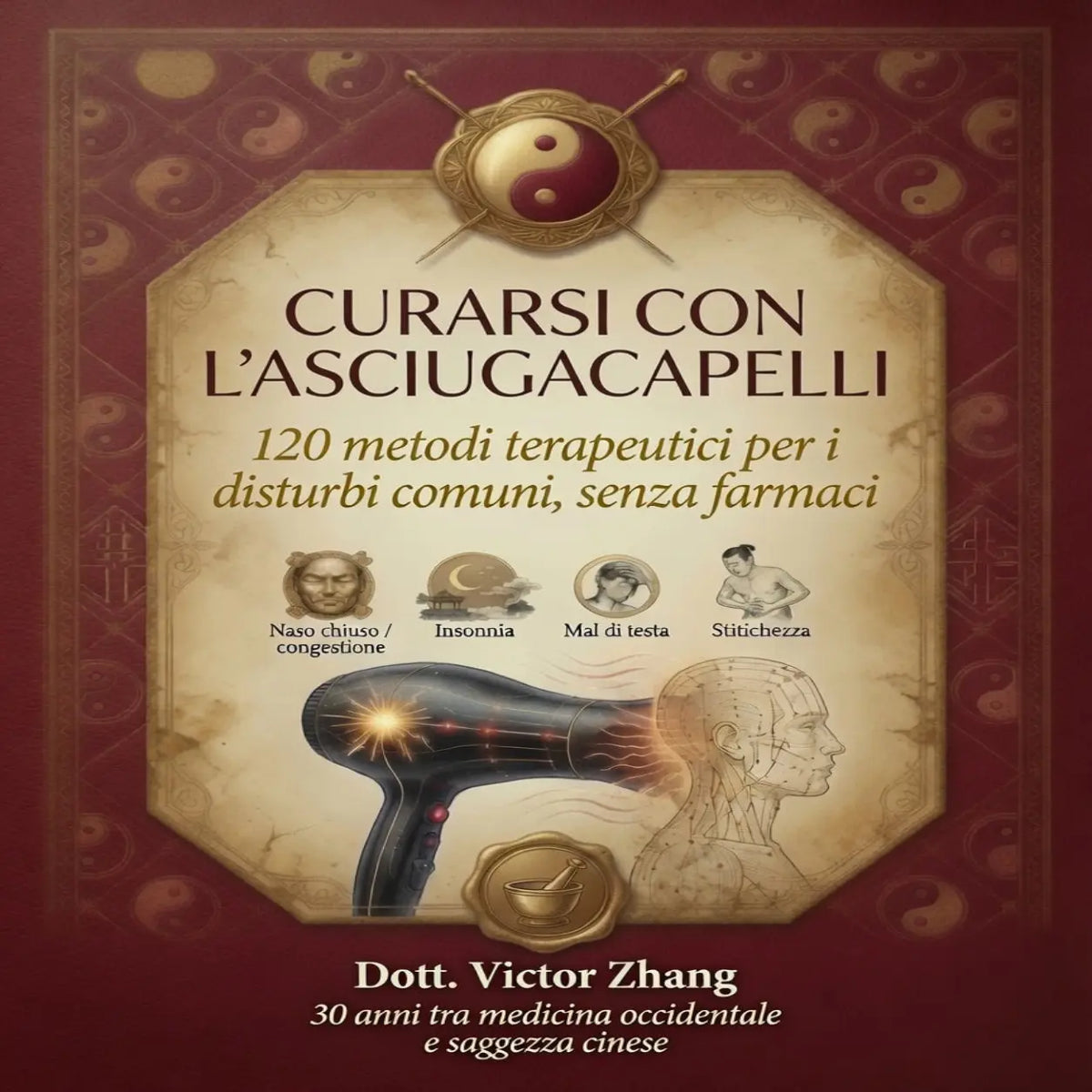
Dr. Victor Zhang has spent over thirty years working the line between two medical traditions that rarely speak to each other: Traditional Chinese Medicine, which he learned from childhood, and Western medicine, which he studied and practiced with the same rigor. He never picks one over the other - he asks, for every patient, which approach (or which combination) will actually help.
Younger colleagues nicknamed him "the doctor who treats you with a hair dryer" a joke that started after he began recommending a heat technique that later became one of the most requested remedies in his practice.
He spent an extended period working in a leprosy patient community early in his career an experience he still describes as the most formative of his professional life, not for what it taught him clinically, but for what it taught him about patience and the value of a small act of care when resources are limited.
But it's his own illness, more than any credential, that shaped this book. Years ago, Dr. Zhang contracted recurring malaria. Out of sheer desperation one night, he tried something unconventional - heating two acupuncture points at the base of his neck with an ordinary hair dryer. It worked. He kept using it every rainy season for five years, and the fevers never came back the way they used to.
That's the spirit of this book: not theory from a textbook, but things he tried on himself first, then on his patients, written the way he'd explain them to a friend at the kitchen table.
Is This You?
Circle every statement that sounds like you. You don't need all to benefit from this book - even one or two is a sign your body is asking for support.
▪️Hemorrhoids that flare up after long hours sitting or standing
▪️Cold hands and feet, or numbness in your arm when you wake up
▪️Bloating, constipation, or "heavy legs" by the end of the day
▪️Visible varicose veins that seem to be getting worse
▪️A chronic urge to clear your throat, or a lingering sore throat
▪️Sinus headaches that flare with weather changes
▪️A dry cough that won't quit, or a stuffy nose most mornings
▪️Frequent colds that seem to "settle" in the same spot every time
▪️Lower back pain from sitting at a desk all day
▪️Wrist or hand numbness from using a mouse or keyboard
▪️Joint stiffness that's worse in the morning
▪️Trouble falling asleep, or waking up still tired
What's Actually Going On
Poor circulation: Sitting for hours, cold exposure, and tight muscles all restrict blood flow to the same areas which is why the same ache, the same cold hand, or the same stiff neck keeps coming back in the same spot.
Cold and damp exposure: Traditional Chinese Medicine has long linked sudden temperature changes going outside with wet hair, sitting in a draft after sweating to a specific pattern of colds, stiff necks, and joint pain. Western medicine explains part of this through vasoconstriction: cold causes blood vessels to narrow, reducing circulation to the area.
Posture compounding over years: Chapters in the book walk through exactly how sitting position, standing position, and even how you hold a mouse or carry a child slowly create the back pain, wrist pain, and numbness patients assume "just happens with age."
Five Kinds of Remedies, One Idea: Use What You Already Have
Contenido desplegable
Heat therapy
Heat therapy
Using a household hair dryer on specific points to improve local circulation the technique that started it all, explained step by step with safety limits
Self-massage
Self-massage
Simple hand techniques for the face, abdomen, and joints that take 2–5 minutes
Breathing & Qigong
Breathing & Qigong
Basic breathing exercises for stress, sleep, and general vitality
Posture correction
Posture correction
Concrete fixes for how you sit, stand, and hold devices, aimed at the root cause rather than the symptom
Daily habits
Daily habits
Small changes - how you chew, how you blow your nose, what you do after meals that the book ties to specific, common complaints
New to the Book? Start Here
This Book Complements Medical Care - It Never Replaces It
Dr. Zhang says this plainly in the book's own opening pages: a simple remedy is still a limited remedy. For everyday, minor discomfort, these pages can genuinely help. But if a symptom persists, worsens, or worries you, don't rely on a book alone see a doctor and don't stop at a single opinion if something doesn't add up.
• Chest pain, irregular heartbeat, or shortness of breath
• Sudden, severe, or unusual headache
• Unexplained weight loss or gain
• Heavy or persistent bleeding
• Joint pain with swelling, redness, or fever
• Any new lump, mole change, or persistent skin lesion
• Signs of an allergic reaction to any remedy in this book
FAQ

Do I need to buy a special hair dryer?

Do I need to buy a special hair dryer?
NO. the book uses an ordinary household hair dryer. Dr. Zhang explains the exact settings, distance, and timing to use safely.
Is this a substitute for seeing a doctor?
Is this a substitute for seeing a doctor?
No, and the book says so directly. It's meant for everyday, minor complaints things like a stiff neck, a stubborn cough, or occasional insomnia. For anything severe, persistent, or worsening, the book itself tells you to see a doctor rather than try a home remedy first.
How is this different from other home-remedy books?
How is this different from other home-remedy books?
Most home-remedy books are a random grab-bag of tips. This one is built from one doctor's own patient cases over 30 years each of the 119 chapters is a real story: what the patient experienced, why it happened, and exactly what fixed it.
How many remedies are in the book, and how is it organized?
How many remedies are in the book, and how is it organized?
119 short chapters across 7 parts, organized loosely by body system: digestion and circulation, throat and sinuses, posture and joints, and general daily habits. Each chapter is a few pages and can be read on its own.
Can I use more than one remedy at a time?
Can I use more than one remedy at a time?
Generally yes most remedies in the book are gentle enough to combine. Start with the one or two chapters that match your main complaint rather than trying the whole book at once.
Is this book only about the hair dryer technique?
Is this book only about the hair dryer technique?
No, the hair dryer method is the book's origin story and one of its most-used techniques (Chapter 36 explains it in depth) but the book also covers self-massage, breathing exercises, posture fixes, and daily habits for a wide range of common complaints.